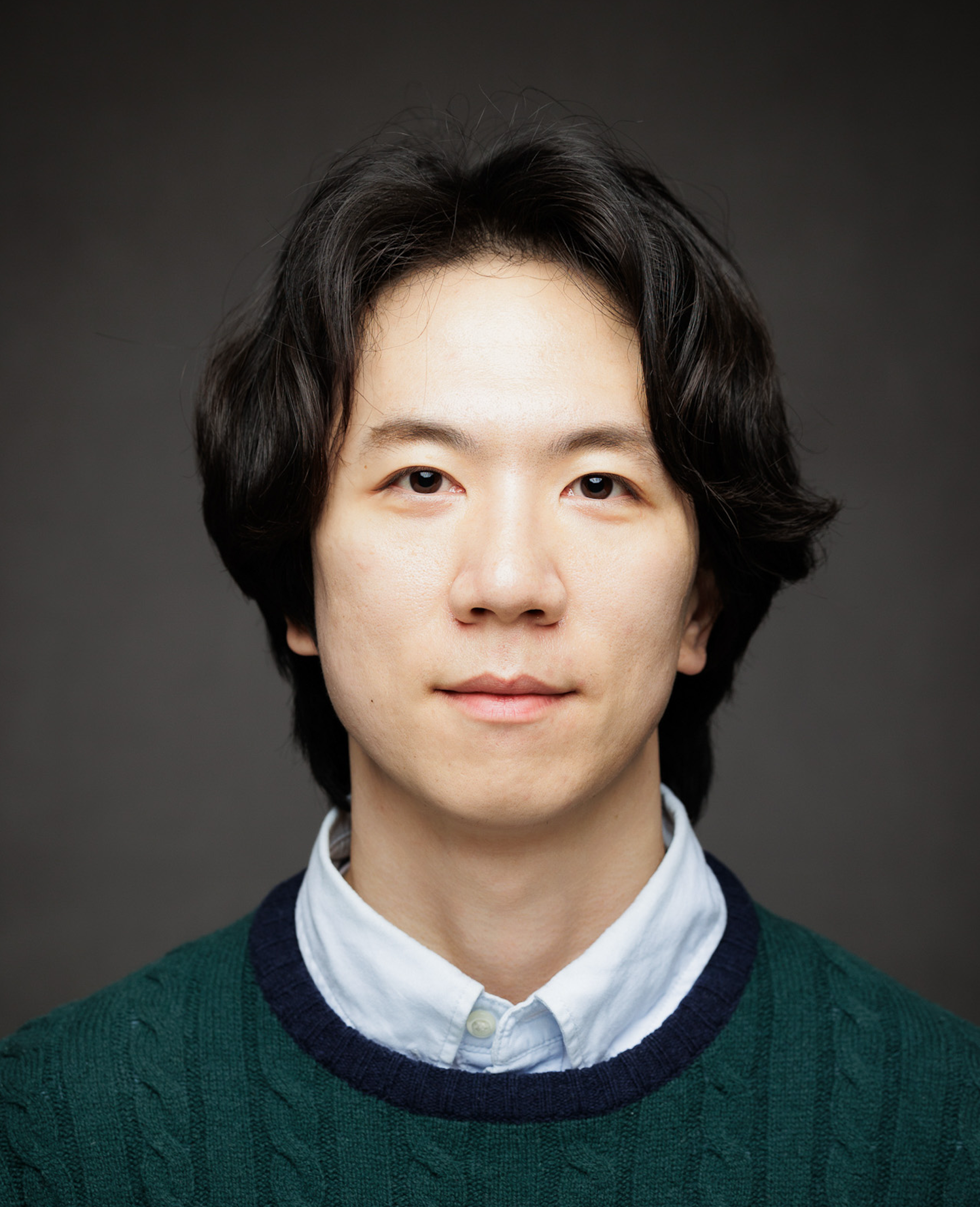
Seung Deok Seo
Ph.D. Student
Department of Political Science
University of Illinois Urbana–Champaign
I am a Ph.D. student in Political Science at the University of Illinois Urbana–Champaign, specializing in Comparative Politics and International Relations.
I study the politics of foreign aid and civil society in aid-receiving countries, especially in the Middle East. My research focuses on NGO behavior and interorganizational relations under authoritarianism and aid dependence, as well as public opinion toward foreign aid.
My dissertation asks why NGOs cooperate deeply with one another in some contexts but engage only in shallow, public-facing collaboration in others. Focusing on Jordan, I examine how competition over credit for joint outcomes shapes their cooperation in aid-dependent and politically regulated environments. The project uses a mixed-methods design combining original data on NGO cooperation, survey experiments, and qualitative interviews.
My broader research agenda examines how both external actors and domestic institutions influence the politics of aid and civil society. One related project studies how religious affinity between donors and recipients shapes public attitudes toward foreign aid. Another examines how NGO laws affect organizational autonomy and the political space available to civil society.
My research has received support from the Institute for Humane Studies, the University of Illinois Graduate College, the Department of Political Science, and the Evelyne Accad and Paul Vieille International Research Award.
Education
-
Ph.D. in Political Science (Comparative Politics; International Relations)
University of Illinois Urbana–Champaign (Expected 2027–2028) -
M.Sc. in Development Studies
London School of Economics and Political Science -
B.A. in Arabic Interpretation and Translation
Hankuk University of Foreign Studies
Research
-
Together in Public, Apart in Practice: Credit Competition and Strategic Shallowness in Civil Society Cooperation
Abstract
Why do NGOs that publicly join the same campaigns sometimes cooperate deeply and sometimes remain strategically shallow? I argue that competition over credit for joint outcomes shapes the depth of cooperation. Focusing on Jordan, the project distinguishes visible, public-facing collaboration from deeper forms of cooperation and combines original data on NGO cooperation, survey experiments, and qualitative interviews.
-
Do Cross-National Aid Allocation Patterns Travel Sub-Nationally?
Evidence from Saudi Aid Allocation in Indonesia
Abstract
The foreign aid literature argues that donors allocate aid according to strategic, political, and identity-based interests. Yet it remains unclear whether such allocation patterns, observed at the cross-national level, also appear within recipient states at the subnational level. We address this question by examining Saudi aid, asking whether the country-level pattern of favoring Muslim-majority recipients is also reflected in the distribution of aid within a recipient state. Using newly available project-level data from the Saudi Aid Platform, we analyze how Saudi Arabia allocates its aid across subnational units in Indonesia. We find limited evidence that Saudi aid is directed toward districts with larger Muslim populations, but more consistent evidence that it is associated with districts where Islamist parties hold a larger share of legislative seats.
-
Whose Aid Is Trusted: Donor Identity and Religious Congruence in Egypt and Indonesia
Abstract
Why do recipient publics trust some foreign donors more than others? We argue that perceived religious congruence between donors and recipients serves as an identity cue that shapes donor legitimacy and interpretations of donor motives. We test this argument through parallel conjoint experiments in Egypt and Indonesia that vary donor identity, project type, and other project characteristics. The study examines how these attributes shape project choice, donor trust, and perceptions of donor motives.
-
Staying Registered, Going Quiet: How Restrictive NGO Laws Suppress Civil Society Activity
Abstract
Restrictive NGO laws have proliferated across aid-receiving countries over the past two decades. Existing research shows that these laws reshape the NGO sector and prompt democracy-oriented donors to scale back their support. Yet a recurring pattern remains underexplored: the number of registered NGOs often remains stable following law passage, even as civil society activity appears to decline. We argue that restrictive NGO laws produce a chilling effect that suppresses civil society activity beyond the documented retreat of foreign donors. Using an updated dataset of restrictive NGO laws and V-Dem measures of civil society participation, we examine post-law changes in civil society activity across aid-receiving countries.
Grants, Fellowships & Training
- Institute for Qualitative and Multi-Method Research (IQMR), Open-Pool Fellow (2026)
- Humane Studies Fellowship, Institute for Humane Studies (IHS) (2026)
- Evelyne Accad and Paul Vieille Research Award (2026)
- Graduate College Dissertation Travel Grant (2025–26)
- Graduate Research and Professionalization Fund (2025–26)
- Illinois Global Institute Language Fellowship in Arabic (2024–25)
Professional & Field Experience
- UN Women — Palestine Country Office
- Korea International Cooperation Agency (KOICA) — Iraq Country Office
- Regional Experience (Training & Study Abroad) — Egypt; Jordan; Israel; Tunisia
Contact
Email: sdseo2@illinois.edu
CV: CV (PDF)
Outside of research, I enjoy photography. Below are selected photographs from my time living in the Middle East.